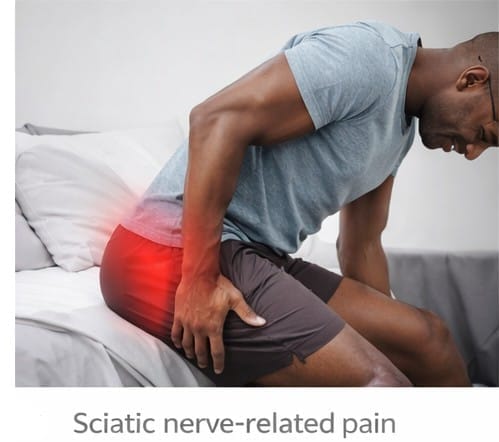
Sciatica, the syndrome of radiating pain, paresthesia, and potential motor deficit following the distribution of the sciatic nerve into the buttock, posterior thigh, and lower leg, is one of the most disabling and commonly misunderstood presentations in musculoskeletal medicine. While the term sciatica describes a symptom pattern rather than a specific diagnosis, it most commonly results from compression or irritation of one or more lumbar nerve roots, typically L4, L5, or S1, by a herniated intervertebral disc, osteophytic spurring from degenerative facet or disc changes, or narrowing of the neural foramina through which the nerve roots exit the spinal canal. The sciatic nerve related pain is frequently accompanied by significant paraspinal and piriformis muscle spasm that compounds the clinical picture and adds a muscular pain dimension to the neurogenic symptoms. Patients presenting with sciatica accompanied by significant muscle spasm may be directed to purchase carisoprodol at the pharmacy after evaluation by their physician as one component of a multimodal management approach.
Anatomy of Sciatic Nerve Compression
The sciatic nerve, formed from the L4 through S3 nerve roots, is the largest peripheral nerve in the human body, exiting the pelvis through the greater sciatic foramen and passing beneath or through the piriformis muscle before descending through the posterior thigh and dividing into the tibial and common peroneal nerves above the knee. Compression or irritation of the contributing nerve roots at any point along their path from the spinal cord to their peripheral distribution can produce the characteristic pattern of sciatic pain.
Lumbar disc herniation is the most common cause in patients under fifty, with the posterolateral disc bulge or extrusion of nucleus pulposus material into the posterolateral aspect of the spinal canal compressing the traversing nerve root against the posterior vertebral body or pedicle. The L5 S1 level is most commonly affected, producing S1 root compression with pain radiating to the lateral foot, weakness of plantar flexion, and diminished ankle reflex. L4 L5 disc herniation produces L5 root symptoms with pain to the dorsum of the foot and great toe, and in older patients, lateral recess stenosis from degenerative hypertrophic facet joints and ligamentum flavum buckling is a common alternative mechanism.
The Role of Muscle Spasm in Sciatica
The paraspinal muscle spasm that accompanies lumbar disc herniation and sciatic nerve root compression arises through the same reflex mechanisms that produce protective spasm in any painful lumbar condition, with the additional contribution of the antalgic lean that many patients with sciatica adopt to reduce nerve root tension. This characteristic lateral trunk shift, usually away from the side of disc herniation, reduces the mechanical loading on the compressed nerve root but requires sustained asymmetric activation of the paraspinal musculature to maintain, producing progressive fatigue, ischemia, and reactive spasm in the constantly activated muscles.
The piriformis muscle, through which or beneath which the sciatic nerve passes, can also develop spasm in response to disc herniation and nerve root irritation, potentially adding a secondary compression component to the primary foraminal compression. Piriformis syndrome, spasm of the piriformis causing local compression of the sciatic nerve, may exist as a primary condition or as a secondary complication of lumbar disc pathology, and its contribution to the overall pain picture should be assessed and addressed when present.
The pharmacological management of sciatica with muscle spasm is appropriately multimodal. NSAIDs reduce the prostaglandin mediated inflammation around the compressed nerve root, potentially reducing nociceptive sensitization and improving the local inflammatory environment. Gabapentin or pregabalin address the neuropathic pain component of sciatica, the burning, shooting, electric quality pain that arises from the nerve itself rather than from surrounding tissue, through their modulation of voltage gated calcium channels in the dorsal root ganglion and dorsal horn. Carisoprodol addresses the muscle spasm component of the pain picture, reducing paraspinal and piriformis hypertonicity and enabling more comfortable movement. Patients who buy carisoprodol with medical prescription for sciatica associated spasm should use it in strict accordance with prescribed dosing and duration parameters.
Corticosteroids, either oral short course or epidural injection, can produce significant anti inflammatory effect around the compressed nerve root, potentially reducing radicular pain more rapidly than NSAIDs alone. Epidural steroid injections, administered by trained interventional pain physicians under fluoroscopic guidance, are particularly effective for acute, severe radicular pain and may reduce the need for surgical intervention in patients whose condition does not improve with conservative management.
Conservative Treatment and Surgical Considerations
The vast majority of sciatica episodes from lumbar disc herniation resolve with conservative management within six to twelve weeks, with natural history studies demonstrating spontaneous resorption of herniated disc material over time. Conservative management including appropriate analgesia, physical therapy addressing both the nerve root irritation and contributing muscle spasm, and gradual return to activity produces satisfactory outcomes in over eighty percent of patients. Surgical intervention, microdiscectomy for focal disc herniation or decompressive laminectomy for spinal stenosis, is reserved for patients with intractable radicular pain unresponsive to four to six weeks of appropriate conservative management, patients with progressive neurological deficits, or the rare presentation of cauda equina syndrome requiring emergency decompression.
Physical therapy for sciatica focuses on neural mobilization techniques to restore sciatic nerve mobility within its soft tissue sheath, targeted stretching of the piriformis and hip external rotators, core stabilization exercises to reduce dynamic loading on the lumbar disc and nerve root, and postural education to minimize nerve root tension during daily activities. The combination of these rehabilitative techniques with appropriate short term pharmacological support for the muscle spasm component, including when appropriate the option to order carisoprodol online with valid prescription from the managing physician, provides a comprehensive conservative management approach that resolves the majority of sciatica episodes without recourse to surgical intervention.