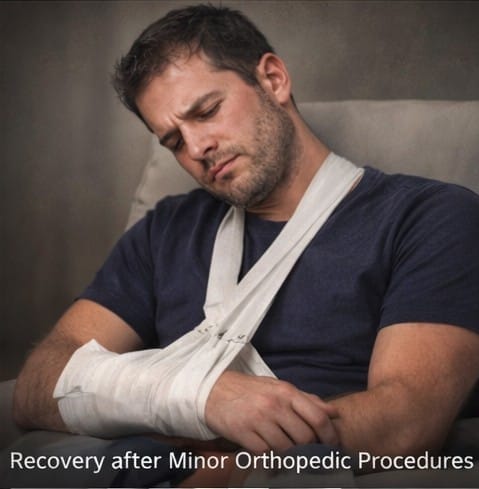
Minor orthopedic procedures, including joint aspiration and injection, arthroscopic surgery, manipulation under anesthesia, minor fracture reduction and casting, and outpatient soft tissue procedures, are among the most frequently performed interventions in musculoskeletal medicine. While classified as minor by virtue of their limited invasiveness and brief recovery expectations, these procedures routinely produce significant post procedural pain and muscle discomfort that can impair patient comfort, delay return to normal activities, and in some cases reduce the functional gains achieved by the intervention itself if inadequately managed. Effective post procedural pain and muscle spasm management is therefore not merely a matter of patient comfort but a clinically meaningful contributor to procedural outcomes.
Carisoprodol has a role in the short term management of muscle discomfort following minor orthopedic procedures, particularly in patients who develop significant post procedural muscle guarding or spasm. Patients who are directed to buy carisoprodol with medical prescription as part of their post procedural recovery protocol should understand that the medication is intended to reduce the muscular component of their discomfort during the immediate post procedural period, facilitating participation in the early rehabilitation activities that are often prescribed to optimize procedural outcomes. Obtaining carisoprodol at the pharmacy after a post procedural medical review ensures that its use is tailored to the specific procedural context and patient clinical status.
Common Sources of Post Procedural Muscle Discomfort
Post procedural muscle discomfort following minor orthopedic interventions arises from several overlapping mechanisms. Direct tissue trauma, even in minimally invasive procedures, activates local nociceptors and triggers a regional inflammatory response that sensitizes surrounding muscle nociceptors, producing hyperalgesia and allodynia in the procedural area and sometimes in adjacent muscle groups. Prolonged positioning on the procedure table, particularly positions that place musculoskeletal structures in sustained stretch or compression, produces postural muscle fatigue and in some cases frank strain injuries that contribute to post procedural pain independently of the primary procedure site.
The period of reduced activity that typically follows a minor orthopedic procedure creates its own muscle discomfort through deconditioning and changes in the mechanical loading patterns to which musculoskeletal structures have adapted. Muscles that are suddenly unloaded following a procedure, for example, following knee arthroscopy when full weight bearing is temporarily restricted, may develop discomfort from altered proprioceptive input and changes in their normal activation patterns. Conversely, muscles that were not directly targeted by the procedure may develop spasm as they compensate for the movement restrictions of the primary procedural area.
Arthroscopic Procedures
Knee and shoulder arthroscopy are among the most commonly performed orthopedic procedures worldwide, performed for diagnostic inspection, meniscal repair, labral repair, ligament reconstruction, chondroplasty, and a variety of other indications. Post arthroscopic pain has both intra articular and peri articular muscular components. The intra articular component, arising from the procedural trauma to synovial and articular structures and from the distension of the joint by irrigation fluid, is most effectively managed with intra articular local anesthetic injection at the end of the procedure and with NSAIDs or acetaminophen in the early post operative period.
The muscular component of post arthroscopic pain, manifesting as spasm and tightness of the quadriceps and hamstrings following knee arthroscopy, or the rotator cuff and periscapular muscles following shoulder arthroscopy, may respond particularly well to short term carisoprodol use. By reducing the reflex protective spasm that develops around surgically disturbed joints, carisoprodol facilitates participation in the early physiotherapy exercises that are critical for restoring range of motion and muscle strength following arthroscopic procedures. Patients who order carisoprodol with a valid prescription from their surgeon or physiatrist for post arthroscopic muscle management should follow the prescribed regimen precisely and communicate any concerns about excessive sedation or other adverse effects promptly.
Manipulation under anesthesia, a procedure in which a joint with significant contracture or restricted range of motion is forcibly mobilized while the patient is under general or regional anesthesia, is performed most commonly for frozen shoulder and post surgical knee joint fibrosis. While the anesthetic eliminates procedural pain, the procedure itself produces significant tissue microtrauma in the joint capsule, ligaments, and peri articular musculature as adhesions are broken down and joint range is restored. The post manipulation period is characterized by substantial pain and muscle spasm as the inflammatory response to the manipulation induced microtrauma develops over the first twenty four to forty eight hours.
Aggressive post manipulation physiotherapy, beginning within hours of the procedure and continuing intensively over the following weeks, is essential to maintain the range of motion gains achieved under anesthesia and to prevent re adhesion. The severe post procedural pain and muscle spasm of the first few days can significantly limit patients’ ability to participate in this essential physiotherapy if inadequately controlled. Short term carisoprodol use in this context is pharmacologically rational, as its direct reduction of protective muscle spasm around the manipulated joint enables greater physiotherapy participation and reduces the risk of losing the range of motion gains that the procedure was intended to achieve.
Post Procedural Monitoring and Recovery
Patients using carisoprodol in the post procedural context should be monitored for excessive sedation, which can be potentiated by any opioid analgesics that may also be prescribed for post procedural pain control. The combination of carisoprodol and opioids produces additive central nervous system depression that requires careful dose management and explicit patient counseling about the risks of concurrent use. Patients must avoid driving and operating machinery while using this combination, and must avoid alcohol throughout the treatment period.
The duration of carisoprodol use following minor orthopedic procedures should be defined at the time of prescribing and should be the shortest course that provides the intended benefit. For most minor procedures, one to two weeks is sufficient for the most acutely spasmodic post procedural period to resolve. As pain improves and physiotherapy exercises become better tolerated, the need for pharmacological muscle relaxation diminishes. Patients who have been directed to purchase carisoprodol after the doctor visit for post procedural recovery should report back to their treating physician or physical therapist at the scheduled follow up visit with an honest account of their pain levels, functional progress, and any concerns about the medication, enabling appropriate adjustment of the overall recovery plan.
Conclusion
The short term management of muscle discomfort following minor orthopedic procedures is an important and sometimes underemphasized component of post procedural care. When significant post procedural muscle spasm develops, it can limit rehabilitation participation, impair the functional gains achieved by the intervention, and significantly worsen the patient experience of what should be a relatively straightforward recovery. Carisoprodol, used appropriately within its approved short term indication and under active medical supervision, provides pharmacological support for the recovery process by reducing the muscular barrier to rehabilitation engagement. Its effective clinical use requires proper diagnosis, appropriate patient selection, clear communication of treatment goals and duration, and integration within a comprehensive post procedural rehabilitation framework.