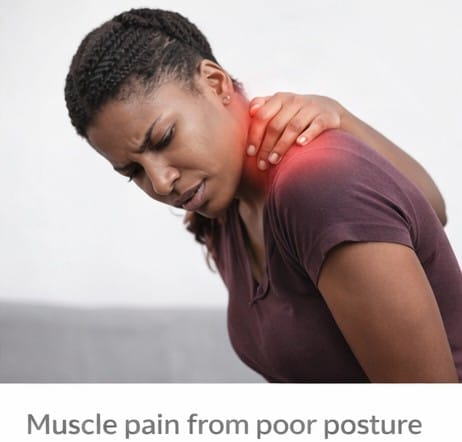
Postural muscle pain, the diffuse, persistent musculoskeletal discomfort generated by sustained abnormal spinal and joint alignment, has reached near epidemic proportions in contemporary society, driven by the sedentary, screen dominated work and leisure patterns that characterize modern life. The human musculoskeletal system evolved for an environment requiring frequent position changes, varied physical demands, and substantial daily movement. When instead subjected to hours of sustained static loading in the forward flexed, internally rotated postural patterns imposed by desk work, driving, and device use, virtually every major muscle group of the axial skeleton and shoulder girdle is placed in a position of chronic mechanical disadvantage that produces progressive fatigue, microtrauma, and reactive tightening. For patients presenting with significant postural muscle pain and associated spasm, a physician evaluation is the appropriate first step, and those directed to purchase carisoprodol with medical prescription as part of their acute management should understand its role as a short term adjunct within a broader postural correction program.
The Most Common Postural Pain Patterns
Upper crossed syndrome, a postural pattern described by rehabilitation specialists, involves a characteristic combination of tight pectorals and anterior shoulder muscles, tight upper trapezius and levator scapulae, weakened deep cervical flexors, and weakened lower trapezius and serratus anterior. The result is a forward head carriage with rounded shoulders and increased thoracic kyphosis that places the posterior cervical and thoracic muscles in sustained elongation under load, the anterior cervical and chest muscles in shortened, adaptively tightened positions, and the shoulder girdle in a position that predisposes to subacromial impingement and rotator cuff problems.
Lower crossed syndrome involves tight hip flexors and lumbar extensors combined with weakened gluteal muscles and abdominal stabilizers, producing an anterior pelvic tilt and increased lumbar lordosis. This postural pattern places the lumbar facet joints in sustained compression, the disc posteriorly in a position of increased posterior annular stress during sustained sitting, and the lumbar paraspinals in chronic activation that produces the low back pain, paraspinal tension, and ultimately muscle spasm characteristic of lumbar postural pain.
How Poor Posture Generates Muscle Spasm
The mechanism through which poor posture generates muscle spasm involves the transition from active muscular dysfunction to reactive protective hypertonicity. Initially, the muscles placed in positions of sustained mechanical disadvantage, typically the posterior cervical, thoracic, and lumbar paraspinals, and the scapular stabilizers, develop fatigue and microtrauma from continuous low level activation in inefficient positions. As this microtrauma accumulates, local nociceptor sensitization develops, and the nervous system responds with reflexive protective spasm in the affected areas.
Myofascial trigger points, discrete hypersensitive nodules within a taut band of muscle fiber that produce local tenderness and a characteristic referred pain pattern when compressed, develop within chronically overloaded and poorly positioned muscles and represent the end stage of cumulative postural overload. Trigger points in the upper trapezius refer pain to the posterior lateral neck and temple, producing tension type headache. Trigger points in the levator scapulae refer pain to the posterior neck and medial scapular border. Trigger points in the thoracic paraspinals produce interscapular and posterior thoracic pain that patients often describe as a constant nagging ache between the shoulder blades.
In the acute phase of severe postural muscle spasm, short term carisoprodol use can reduce the hypertonicity that is limiting movement and preventing effective postural correction exercises. Patients who buy carisoprodol at the pharmacy after a physician assessment should use the pharmacological support as an enabler of the postural rehabilitation program rather than as a substitute for it. The medication reduces the muscular barrier to corrective movement, allowing physical therapists to apply techniques and prescribe exercises that would otherwise be too painful to tolerate.
Physical therapy addressing postural pain focuses on three complementary objectives: releasing the tight, shortened structures that are maintaining abnormal posture; strengthening the weak, inhibited muscles that are failing to maintain optimal alignment; and retraining the neuromuscular coordination patterns that govern postural control during dynamic activities. Soft tissue techniques including myofascial release and trigger point therapy address the first objective. Progressive resistance exercises targeting the deep cervical flexors, lower trapezius, serratus anterior, gluteal muscles, and abdominal stabilizers address the second. Movement retraining in functional activities addresses the third.
Ergonomic Solutions and Sustainable Change
Sustainable resolution of postural muscle pain requires modifications to the physical environments in which the pain generating postures are adopted. Workstation ergonomics assessment and correction, optimizing monitor height and distance, chair seat height and back support, keyboard placement, and document holder positioning, can substantially reduce the biomechanical demands that produce postural strain during the working day. For remote workers whose home workstations have grown organically without ergonomic design, a structured assessment followed by targeted modifications often produces dramatic improvements in postural pain burden within two to four weeks.
Movement breaks, interrupting prolonged static postures every thirty to sixty minutes with brief periods of movement that take the spine and shoulder girdle through their full range, counteract the tissue ischemia and neuromuscular fatigue that accumulate during sustained posture and represent one of the most immediately effective and accessible interventions for postural pain. A simple two minute sequence of cervical retraction, thoracic extension, shoulder blade squeezes, and hip flexor stretching, performed consistently throughout the working day, can produce clinically significant reductions in postural pain burden within one to two weeks.