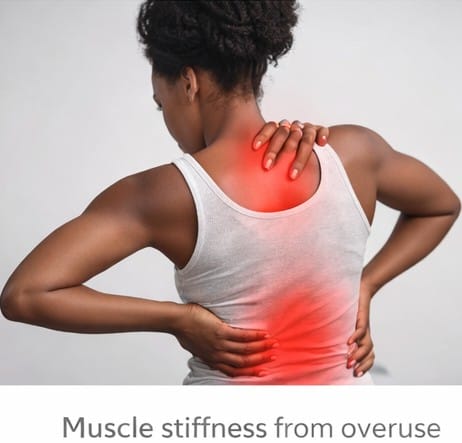
Muscle stiffness arising from physical overuse represents one of the most common and yet clinically nuanced musculoskeletal presentations encountered in sports medicine, occupational health, and primary care settings. Unlike the acute, event specific pain of traumatic muscle strain, overuse related muscle stiffness develops through the accumulation of repetitive mechanical stress at levels below the threshold that produces immediate tissue injury, resulting in progressive fatigue, microstructural damage, and a reactive stiffening of the affected muscle groups that limits both range of motion and functional capacity. When overuse related stiffness reaches a severity that significantly impairs daily activities or athletic performance, medical evaluation is warranted, and pharmacological management including centrally acting muscle relaxants may be indicated. Patients who present to their physician and are directed to purchase carisoprodol at the pharmacy as part of a structured overuse recovery protocol should understand its role as a short term bridge facilitating recovery rather than a long term management solution.
The Physiology of Overuse
Muscles adapt to mechanical loading through a cycle of microtrauma and repair, the fundamental mechanism through which training produces strength and endurance gains. However, this adaptive process requires adequate recovery time between loading bouts to complete the repair phase and consolidate structural adaptations. When loading is applied more frequently than the repair process can accommodate, the accumulated microtrauma exceeds the repair capacity, progressive muscle fiber disruption occurs, and the clinical presentation of overuse injury develops.
At the cellular level, overuse injury involves disruption of the cytoskeletal proteins within muscle fibers, particularly titin, desmin, and the Z disc proteins that maintain sarcomere structural integrity during the high mechanical forces of eccentric contraction. This cytoskeletal damage triggers a localized inflammatory response, with neutrophil infiltration in the first twenty four hours followed by macrophage dominated inflammation through the first week, producing the local pain, swelling, and reduced force generating capacity that characterize acute overuse presentations.
The mechanical stiffness that is the defining feature of overuse related presentations has both structural and neurological components. Structurally, the inflammatory exudate and cellular debris within the damaged muscle tissue increase its passive mechanical stiffness, reducing compliance and restricting range of motion. Neurologically, the sensitized nociceptors within the inflamed muscle generate tonic afferent input to the spinal cord that drives reflexive protective muscle guarding, a co contraction of agonist and antagonist muscle groups that further limits movement and adds its own pain contribution.
Recognition and Assessment
The clinical presentation of overuse related muscle stiffness typically involves a gradual onset of localized or regional muscle tightness, reduced range of motion in the associated joints, increased muscle tenderness on palpation, and reduced force generating capacity in the affected muscle groups. The affected area may feel abnormally dense or indurated compared to the uninvolved side. Pain is typically present at the extremes of range of motion and during loading of the affected muscles, and is often accompanied by a stiffness that is worst after periods of rest and improves somewhat with gentle movement as the tissues warm up.
Distinguishing overuse related stiffness from more serious conditions including compartment syndrome, stress fractures, and rhabdomyolysis is essential before initiating symptomatic management. Compartment syndrome is a surgical emergency presenting with severe pain disproportionate to apparent tissue injury, tense swelling of a muscle compartment, pain with passive stretch of the muscles within the compartment, and neurovascular compromise distally. Rhabdomyolysis, characterized by severe muscle pain, weakness, and dark urine from myoglobinuria, requires immediate medical management. Stress fractures in athletes with bone pain that worsens with activity require imaging confirmation before treatment.
Management Approaches
The cornerstone of overuse related muscle stiffness management is relative rest, reducing the loading stimulus that is causing and perpetuating the injury while maintaining sufficient activity to preserve cardiovascular fitness and prevent deconditioning. Complete rest is rarely indicated and may delay recovery; cross training activities that maintain fitness while unloading the affected muscles are preferable where possible. Ice application in the acute phase reduces local inflammatory activity and provides analgesic benefit through gate control mechanisms.
NSAIDs provide anti inflammatory and analgesic benefit in overuse presentations, though their use should be time limited given evidence that prolonged NSAID use may impair muscle satellite cell proliferation and the remodeling phase of tissue repair. For presentations with significant reactive muscle spasm superimposed on the overuse stiffness, short term carisoprodol use may be indicated. Patients who buy carisoprodol with medical prescription for this indication should combine the medication with a structured progressive loading program guided by a sports medicine specialist or physiotherapist, recognizing that pharmacological muscle relaxation is only one component of an effective overuse recovery strategy.
Return to Activity
Return to full activity following overuse related muscle stiffness should be guided by progressive symptom resolution and functional testing rather than a fixed timeline, as individual recovery rates vary considerably based on the severity of the overuse, the muscle group affected, the patient’s overall fitness level, and the adequacy of recovery interventions. A practical return to activity framework begins with pain free range of motion, progresses to low load resistance exercises, then moderate load exercises, and finally sport specific high demand activities, advancing to the next stage only when the preceding stage is pain free and producing no reactive stiffness or swelling in the following twenty four to forty eight hours.
Modifying the training program that produced the overuse injury is essential for preventing recurrence. Common contributory factors include excessive rapid increases in training volume or intensity, inadequate warm up and cool down routines, insufficient recovery time between training sessions, inappropriate footwear or equipment, and training surfaces that impose excessive impact loading. Addressing these factors in a revised training plan, combined with attention to nutrition and sleep quality, provides the foundation for long term participation without recurrent overuse injury.