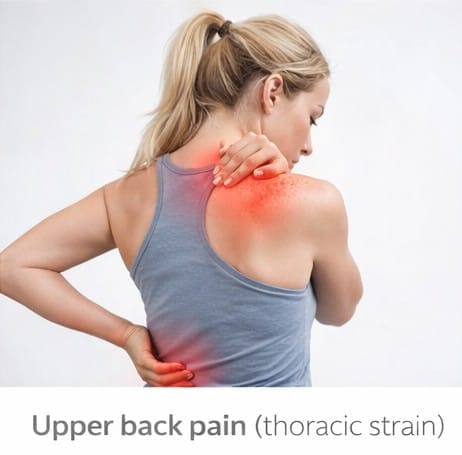
Upper back pain arising from thoracic muscle strain and paraspinal muscle spasm is a clinically distinct entity from cervical or lumbar pain, though it shares many of the same pathophysiological mechanisms and management principles. The thoracic spine, comprising twelve vertebrae from the base of the neck to the lower rib cage, is the most structurally stable segment of the spine due to its bony articulation with the ribs and sternum, which provide substantial resistance to flexion and rotational forces. This inherent stability means that isolated thoracic intervertebral disc herniations are far less common than cervical or lumbar herniations, and the predominant cause of thoracic pain is musculoligamentous strain and paraspinal muscle spasm. Patients presenting with significant upper back pain and muscle spasm who are evaluated by a physician may be directed to buy carisoprodol online with rx as part of a short term management approach targeting the spasm component of their pain.
Causes of Thoracic Muscle Strain
Thoracic paraspinal strain most commonly results from sustained postural loading in forward flexed positions, the characteristic postural pattern of desk work, driving, and prolonged smartphone use that loads the posterior thoracic musculature in a sustained eccentric contraction as it resists the forward flexion force of gravity acting on the head and upper trunk. Workers who spend significant portions of their day in sustained forward flexed or rotated trunk positions, assembly line workers, hairdressers, surgeons, and musicians, are at particularly high risk for this mechanism of thoracic strain.
Acute thoracic strain can also result from sudden forceful movements, particularly rotational forces applied to the thoracic spine during sport or manual labor, and from direct trauma such as the impact forces experienced in contact sports, falls, or motor vehicle accidents. The large superficial muscles of the upper back and posterior shoulder girdle, the trapezius, rhomboids, and latissimus dorsi, are vulnerable to acute strain from rapid, unguarded movements, and their injury produces pain that patients often describe as between the shoulder blades or radiating across the posterior thorax.
Distinguishing Thoracic Strain from Serious Pathology
A critically important clinical principle in upper back pain management is that thoracic pain warrants more careful exclusion of serious pathology than cervical or lumbar pain, because several potentially serious conditions preferentially manifest in this region. Thoracic aortic aneurysm and dissection, cardiac ischemia with posterior radiation, pulmonary embolism, esophageal pathology, and malignant disease involving the thoracic vertebrae or adjacent structures can all present with upper back pain that mimics musculoligamentous strain. Red flag features including pain that is constant and unrelated to movement, nocturnal pain that awakens the patient from sleep, pain associated with respiratory symptoms, constitutional symptoms including fever and weight loss, a history of malignancy, or severe pain following minor trauma in an older patient with osteoporosis all mandate urgent evaluation before symptomatic management is initiated.
In patients without red flag features whose history and examination are consistent with mechanical thoracic strain, pain that is activity and position related, reproducible with palpation of specific thoracic segments, and associated with restricted thoracic mobility and paraspinal tenderness, conservative management including appropriate analgesia and muscle relaxants can be initiated with confidence.
Treatment Approach
Management of thoracic muscle strain follows the same multimodal principles that govern lumbar and cervical strain. NSAIDs or acetaminophen address the inflammatory and primary nociceptive pain components. Heat application to the thoracic paraspinal muscles reduces spasm and increases local circulation. Thoracic mobility exercises, gentle extension and rotation movements within pain limits, counteract the tendency toward protective immobilization that perpetuates stiffness and delayed recovery. For presentations with significant paraspinal spasm limiting mobility, carisoprodol provides centrally mediated reduction of muscle hypertonicity. Patients who purchase carisoprodol with medical prescription for thoracic strain should follow the standard short term dosing protocol and combine the medication with the postural and rehabilitative interventions that address the underlying mechanical contributors.
Physical therapy for thoracic strain focuses on thoracic joint mobilization and manipulation, soft tissue techniques addressing the rhomboids, trapezius, and thoracic paraspinals, and progressive thoracic extension and rotation exercises. Scapular stabilization exercises are particularly important, as weakness of the scapular stabilizers, serratus anterior, lower trapezius, and rhomboids, is a common contributing factor in both thoracic strain and the postural problems that predispose to it. Ergonomic modification of the work environment, particularly for patients whose thoracic strain is driven by sustained postural loading, is essential for preventing recurrence.
Long Term Management
Preventing recurrent thoracic strain requires addressing the postural habits and ergonomic factors that predispose to it. Thoracic extension exercises performed regularly throughout the working day, even brief mobilization breaks every thirty to sixty minutes, counteract the flexion bias imposed by sedentary work and maintain thoracic mobility and paraspinal muscle health. Strengthening the scapular stabilizers and thoracic extensors through targeted resistance training provides the muscular support that reduces cumulative mechanical stress on thoracic structures during sustained activities. Attention to breathing, specifically diaphragmatic breathing that expands the lower rib cage and maintains thoracic mobility, contributes to long term thoracic spine health in ways that are often overlooked in conventional rehabilitation programs.